
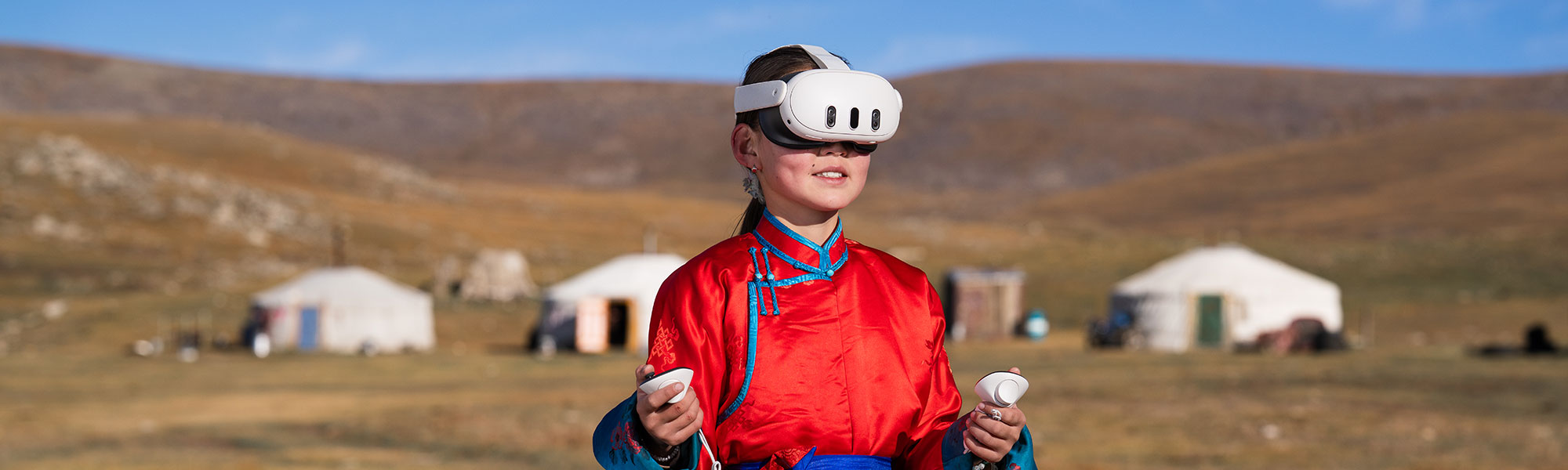
Immersive virtual reality serving pastoral farmers
A virtual reality experience
Thanks to a series of 360° films, visitors find themselves immersed in pastoral landscapes: they follow a caravan of camels in Chad, watch a summer ascent in the French Alps, share a moment of camping with Mongolian herding families, or cross the Sahelian plains of Senegal with moving herds.
Equipped with virtual reality headsets, they are immersed in everyday activities, seasonal rhythms, and the intimate relationship between humans, animals, and natural environments.
The exhibition is also a tool for pastoralists themselves, allowing them to discover the lives and practices of fellow herders on other continents. This exchange of perspectives is also a source of joy and wonder for pastoralists.
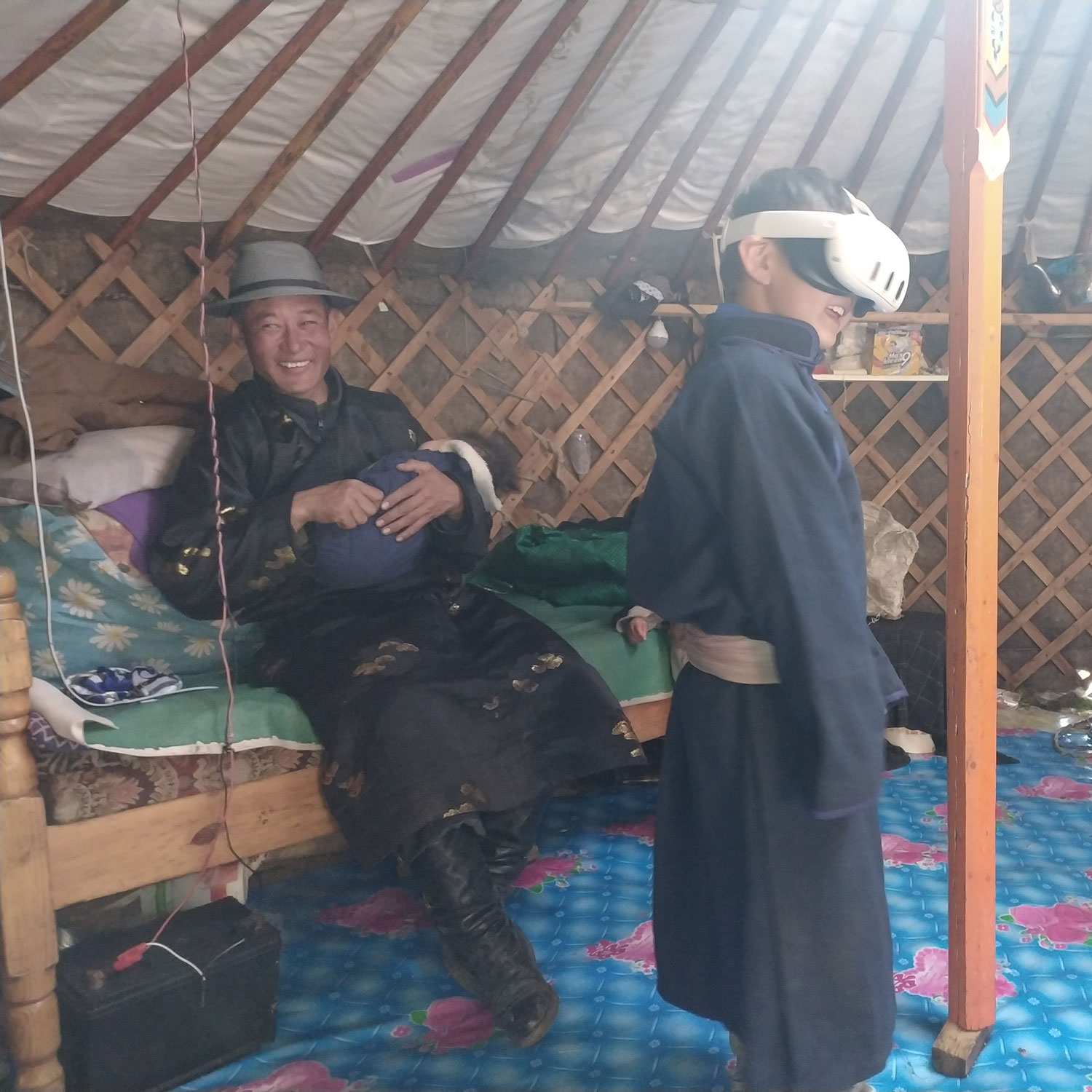

A comprehensive exhibition format: virtual reality, photography, and science outreach.
Based on multi-format field capture, the exhibition brings together several complementary media:
- 360° films offering complete immersion.
- A photographic exhibition showcasing the people, landscapes, and skills of pastoralist communities.
- An accompanying booklet offering insights into the social, economic, environmental, and cultural dimensions of pastoralism.
- Dedicated discussion spaces where visitors can engage with researchers, partners, and field actors.
Together, these components offer a deeper understanding of this essential yet often misunderstood way of life, weaving together science, visual media, and narrative.
An awareness-raising tool
The exhibition therefore aims to:
- raise awareness among a broad audience;
- highlight pastoral knowledge and cultures;
- encourage dialogue among scientists, civil society, and policymakers.
