
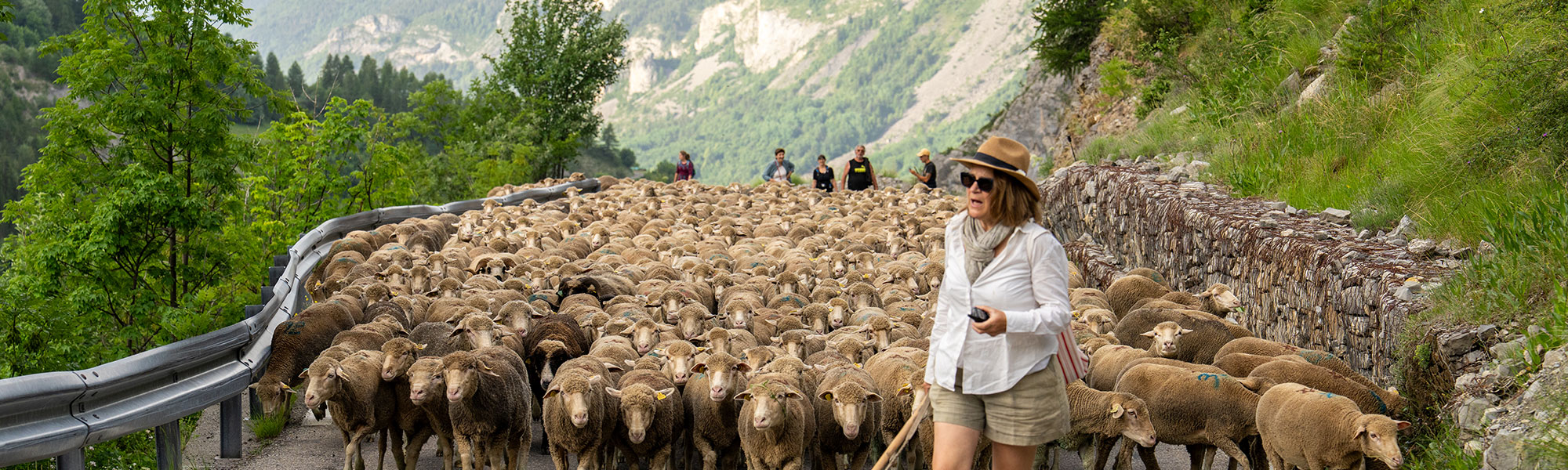
Summer mountain grazing in the heart of the Mercantour National Park (France).
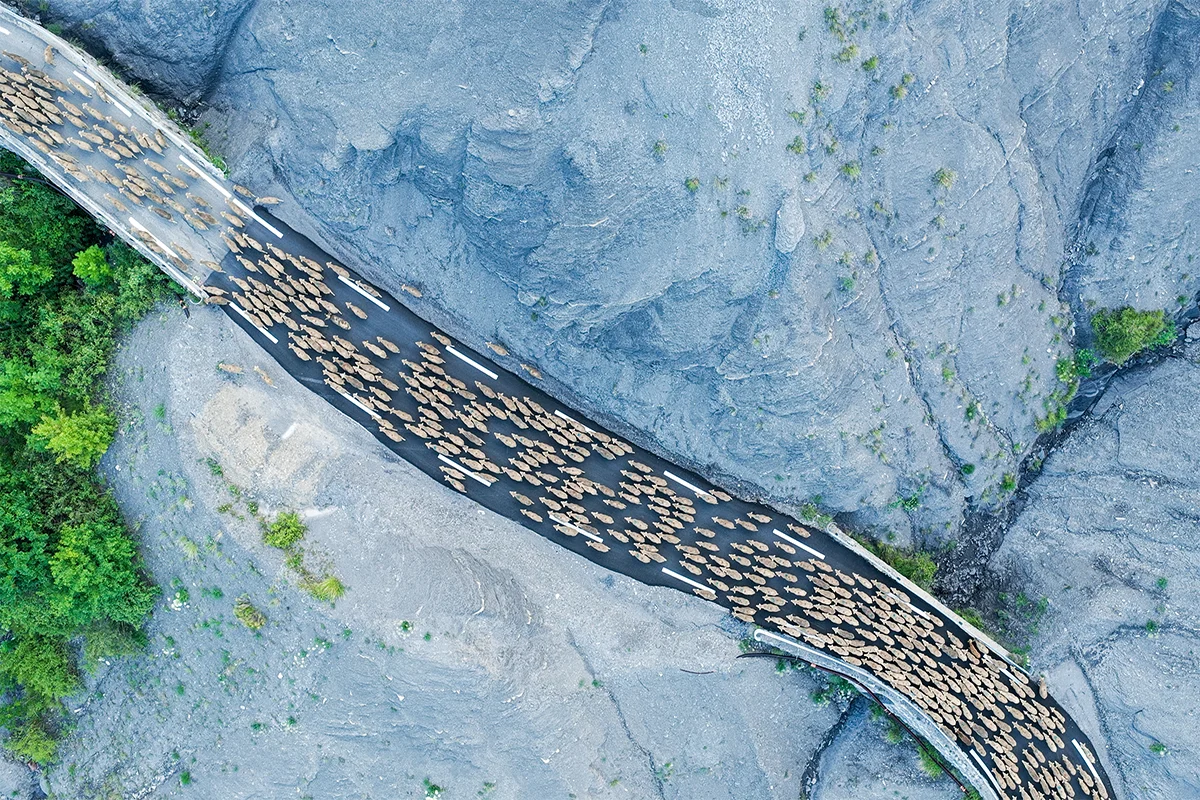
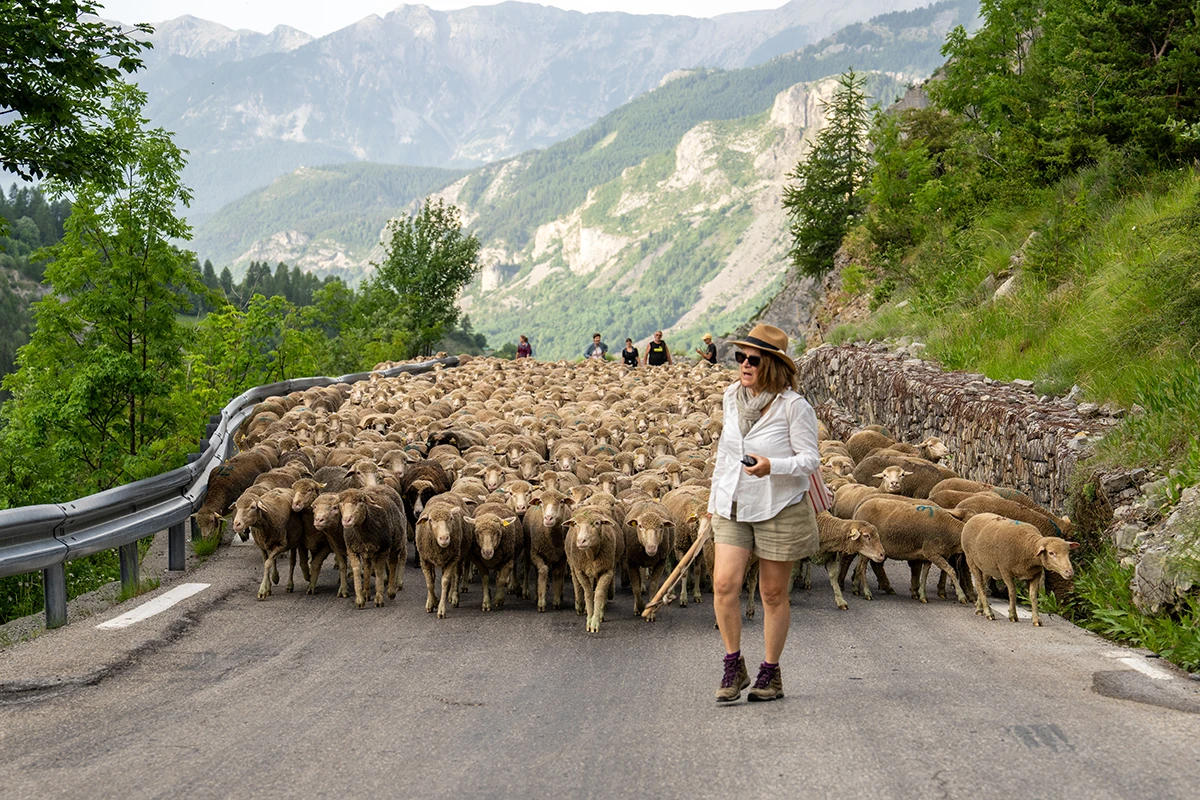
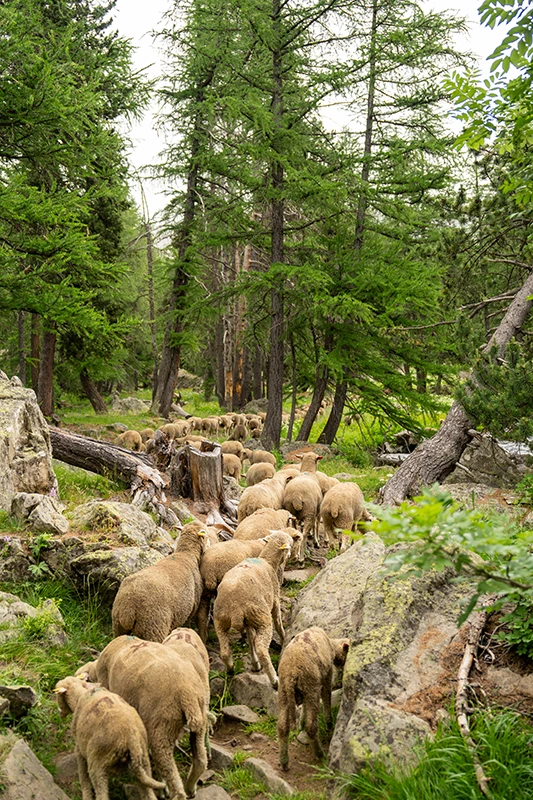
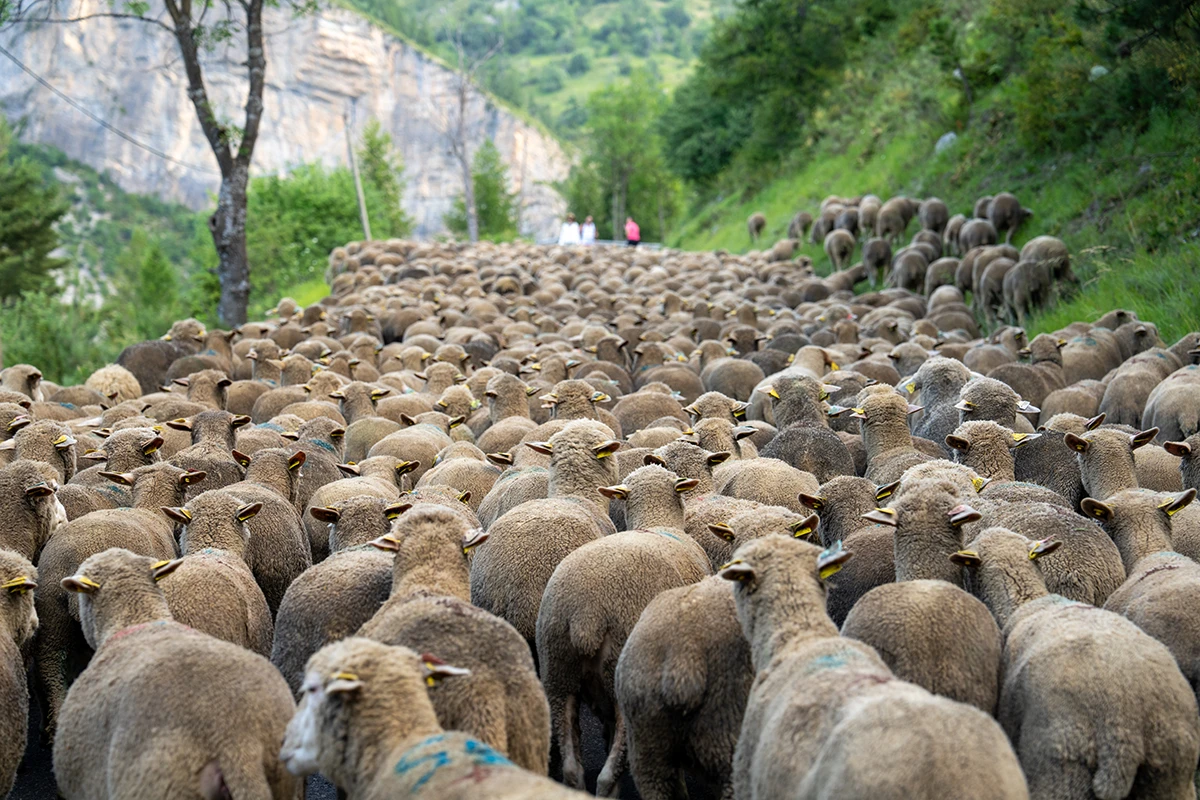
Part of the 1,500 ewes from the Domaine du Merle, based in Salon-de-Provence, has left the plaine de la Crau. In June, in this coussoul steppe area (a dry, stony grassland typical of Provence)1the summer heat no longer allows the animals’ feeding needs to be met. After that, after a 250-kilometre journey by truck,the ewes reach the village of …Entraunes, the gateway to the Mercantour National Park. At daybreak, the last ten kilometres are covered on foot to reach the shepherd’s hut. The flock is then fed exclusively on natural vegetation in an area with high biodiversity value.
Interview with Jim
Jim – Young shepherd on transhumance
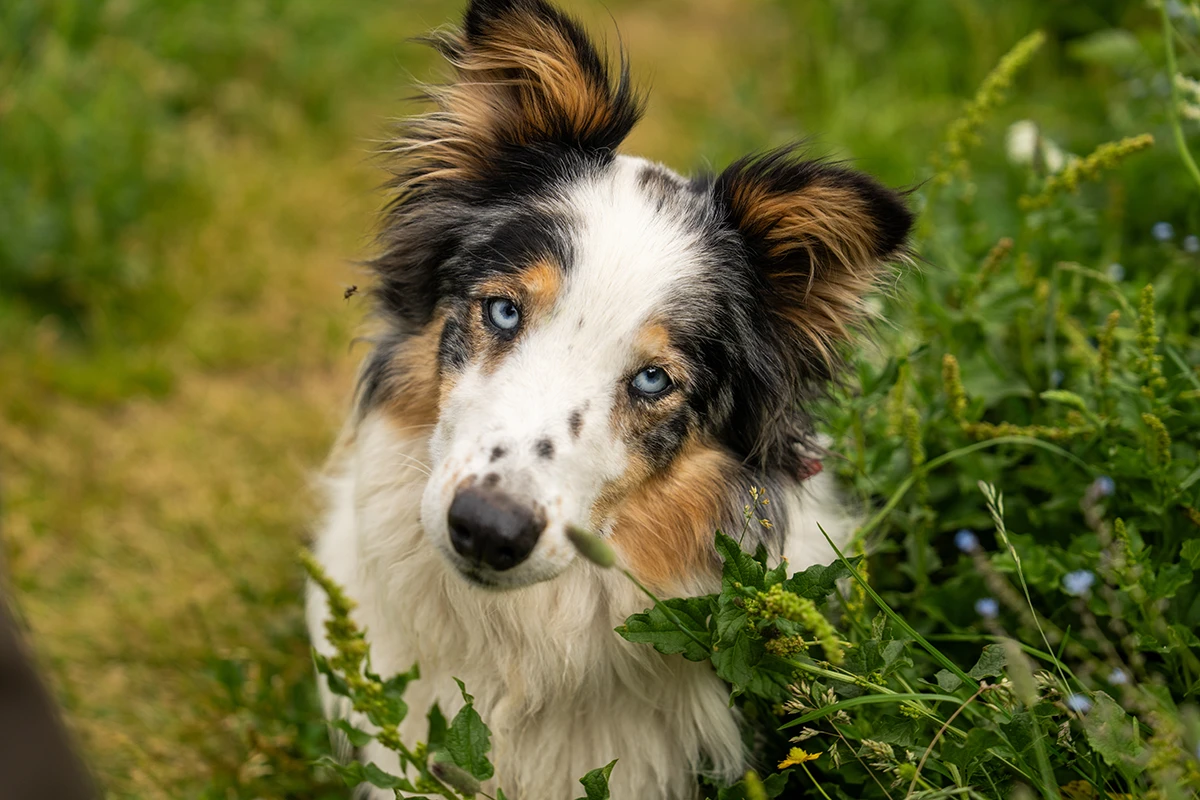
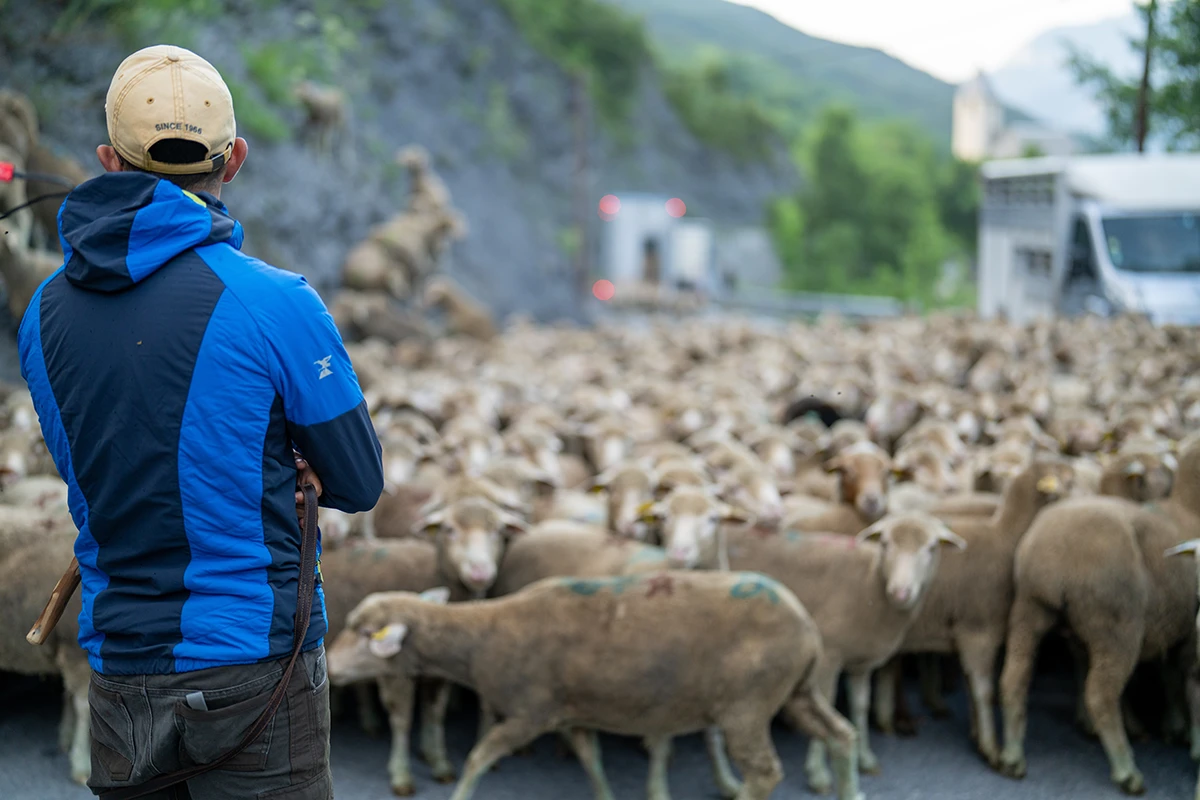
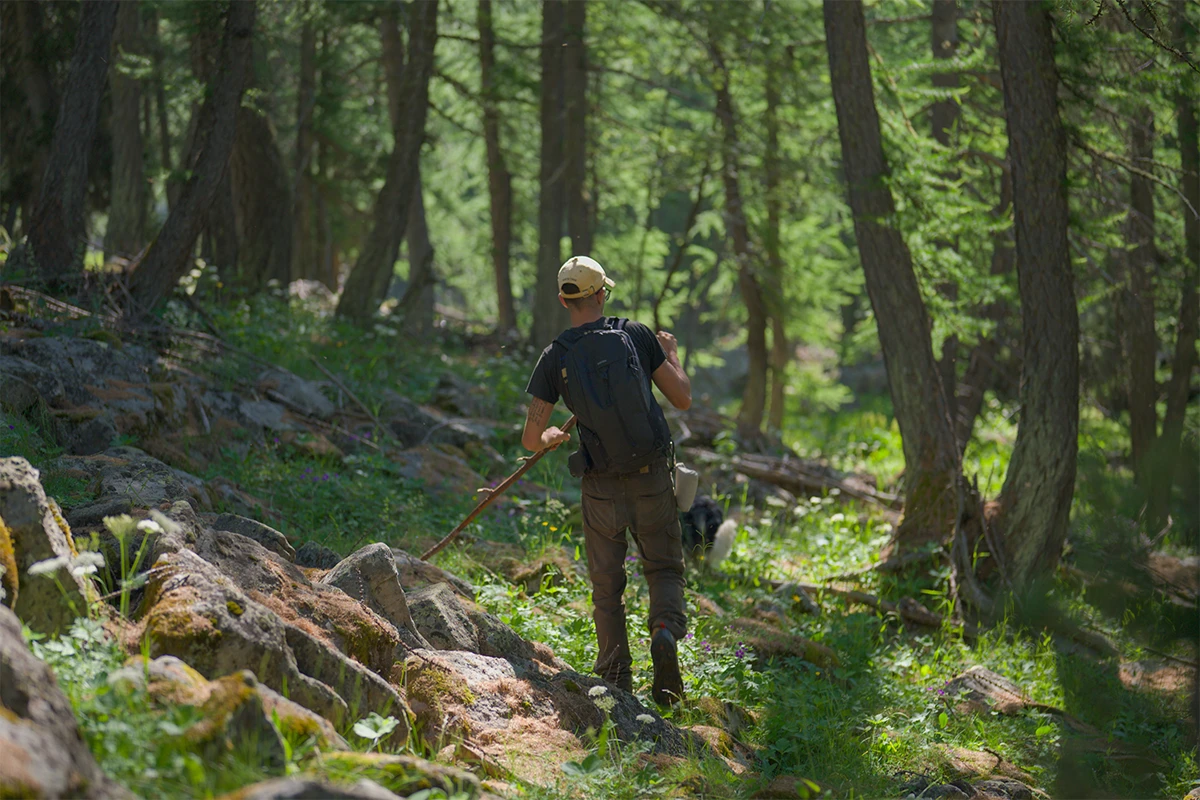
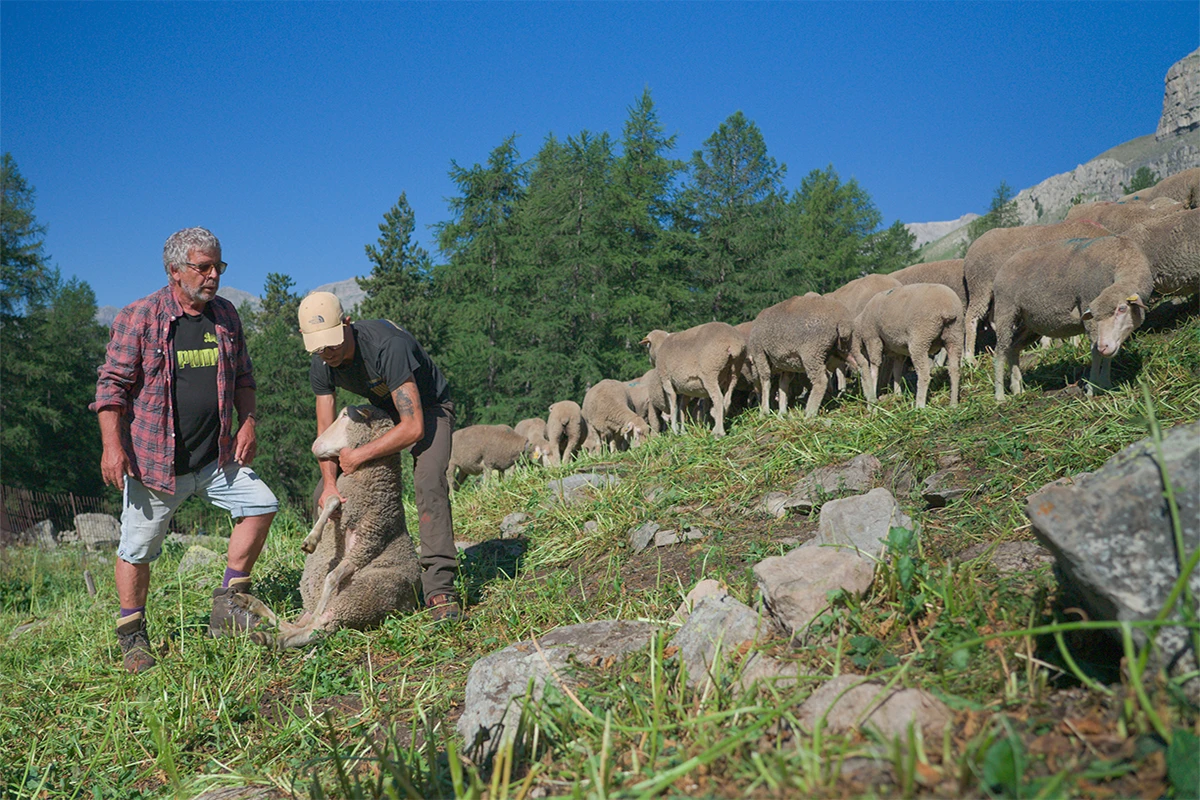
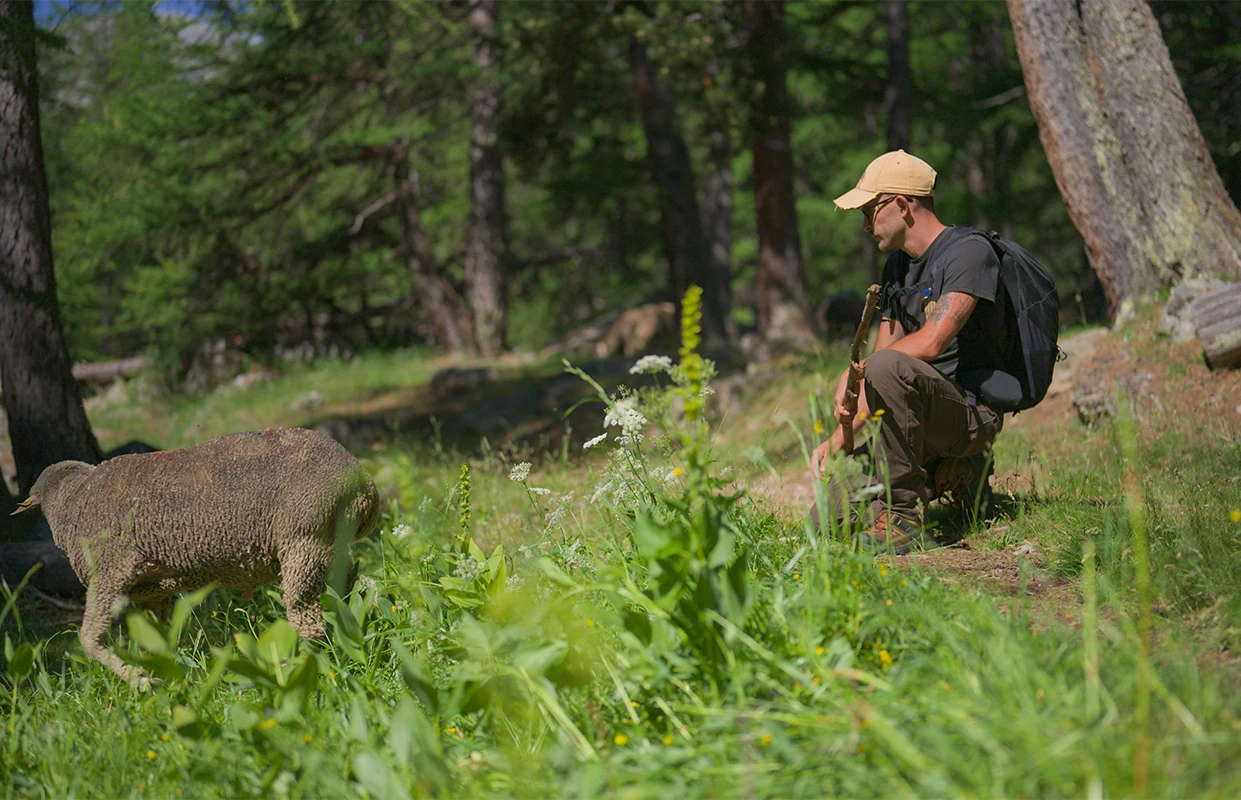
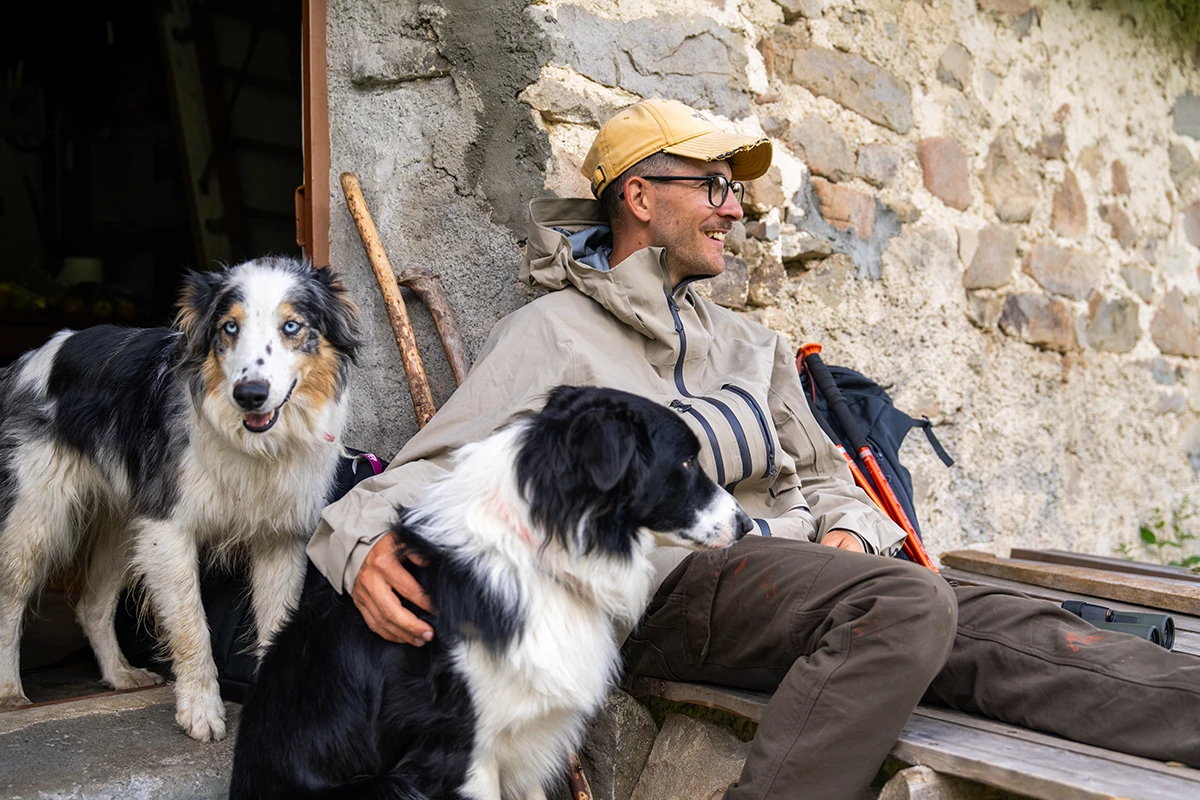
Jim is a young shepherd trained at the Domaine du Merle (Institut Agro Montpellier – INRAE). Currently enrolled in the professional qualification for transhumant shepherd–cattle herder, he is beginning his first experience of independently managing a flock. He accompanies part of the Domaine’s 1,500 ewes, originally from the Crau plain. The flock travels about 250 km by truck, followed by a 10 km walk to reach the alpine pasture. On the alpine pasture, Jim gradually gets to know his seasonal territory and “his” flock. He will spend three months on the summer grazing grounds, developing his own herding style. His dog becomes his main ally: alert and responsive, it gathers, guides, contains, and secures the flock’s movements.
“For me, it’s my first summer on the alpine pasture — and for the ewes, it’s the start of their holidays.”
he says with a smile, watching the ridgelines that will overlook every step he takes until the end of the season.


Sustainable management of alpine pastures: a valuable body of knowledge held by herders
To support this management, herders receive subsidies in the form of agri-environmental and climate measures (known as “AECMs”). and they organize themselves to manage these areas collectively.
At the beginning of the season, Jim was informed about the grazing plan for the Sanguinière alpine pasture. He knows he will need to avoid certain areas at specific times or, conversely, prioritize grazing on particular resources at a given stage of growth specific.
AECMs help herders cope with the many ongoing changes. These include have a strong impact on agro-pastoral livestock systems and require the development of new forms of herding that are both suited and adaptable to climate variability.
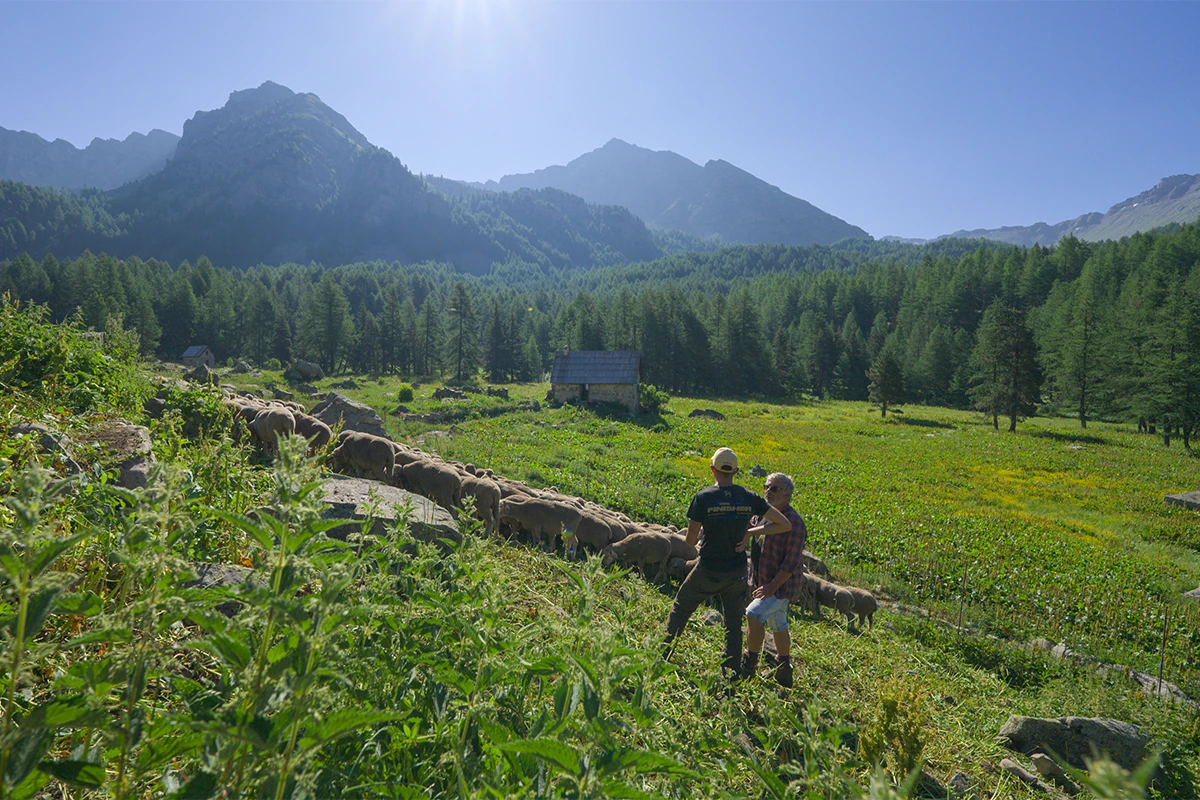
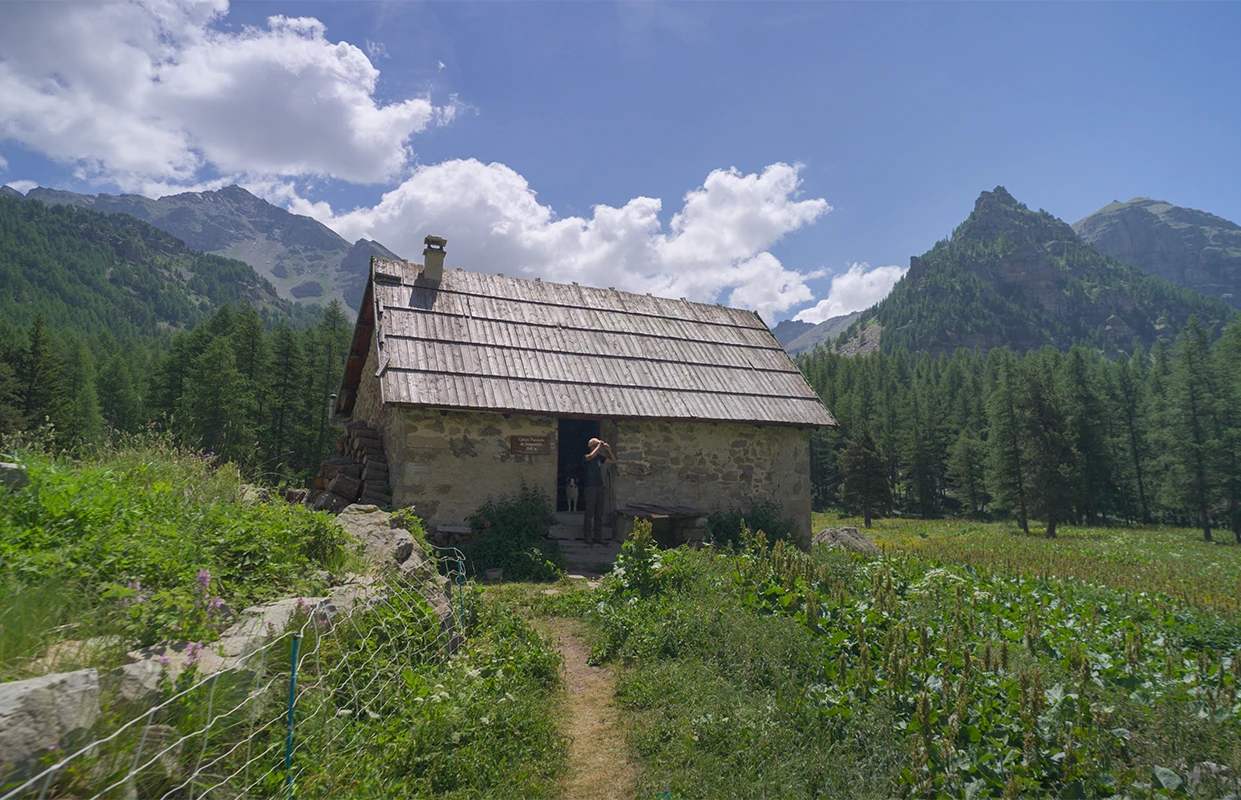
A hut in the pastoral larch forest.
On this alpine pasture, perched at nearly 2,000 meters above sea level, the shepherd’s hut stands at the heart of a pastoral larch forest. This alpine silvo-pastoral system is managed jointly with grazing. Thanks to the deciduous and open canopy of the larch, sunlight reaches the ground, allowing a rich herbaceous layer to develop, which is used by the flocks, most often during the summer season.
The larch forest is home to woodland birds — tree pipits, warblers, and common redstarts — and, in the Southern Alps, it is a key habitat for the emblematic black grouse.
To ensure the protection of these environments and their associated biodiversity, the Parc national du Mercantour establishes management agreements with herders, balancing pastoral activities with the preservation of sensitive habitats.


The presence of wolves: a risk managed on a daily basis
In this part of the Parc national du Mercantour, several wolf packs are established. The ewes are therefore brought back into night enclosures every evening. Losses occur mainly during the day, but remain relatively limited.
“We’re always careful. But we know that coexistence is part of the job.”
The wolf naturally returned from Italy in 1992. The Parc national du Mercantour counts around a hundred wolves within its territory. A support scheme to help implement protective measures is offered to herders by state services, combining the use of livestock guardian dogs, grouping animals into electrified night enclosures, and maintaining a constant human presence.
Walking transhumance is being reinvented
Today, most transhumance movements are carried out exclusively by truck. In the case of the Sanguinière summer pasture, however, the road does not allow the animals to be dropped off directly on the alpine grazing area. The flock must therefore walk about ten kilometres, from the village of Entraunes to the hut — a task that involves nearly ten people.
Many summer pastures are still in this situation. Transhumance, however, is now better recognized and valued than in the past.
In southeastern and southwestern France, a few shepherds still uphold the tradition of the drailles and old drove roads, carrying out multi-day transhumance journeys from the plains to the mountains. They benefit from undergrowth clearing contracts, contributing to wildfire risk prevention, and are often welcomed as heroes as they pass through villages.

Immersive 360° Transhumance
The transhumance of the Merle flock to the Sanguinière summer pasture was filmed in early July 2025.
A photographic slideshow documenting the transhumance


The PasAgroPas project (PRIMA).
The PAS-AGRO-PAS project supports around fifteen agro-pastoral livestock systems in designing new forms of pastoralism adapted to climate change.
This project aims to highlight all dimensions of the multifunctionality of Mediterranean agro-ecosystems and to adapt them to environmental, agroecological, economic, sociocultural, and institutional challenges. It relies on a systemic approach that encourages the identification of constraints affecting system viability and the implementation of appropriate strategies.